
Growing Season in Chicago.
How Chicago’s J/70 fleet went from quiet to thriving. And what every sailing community can learn from it.
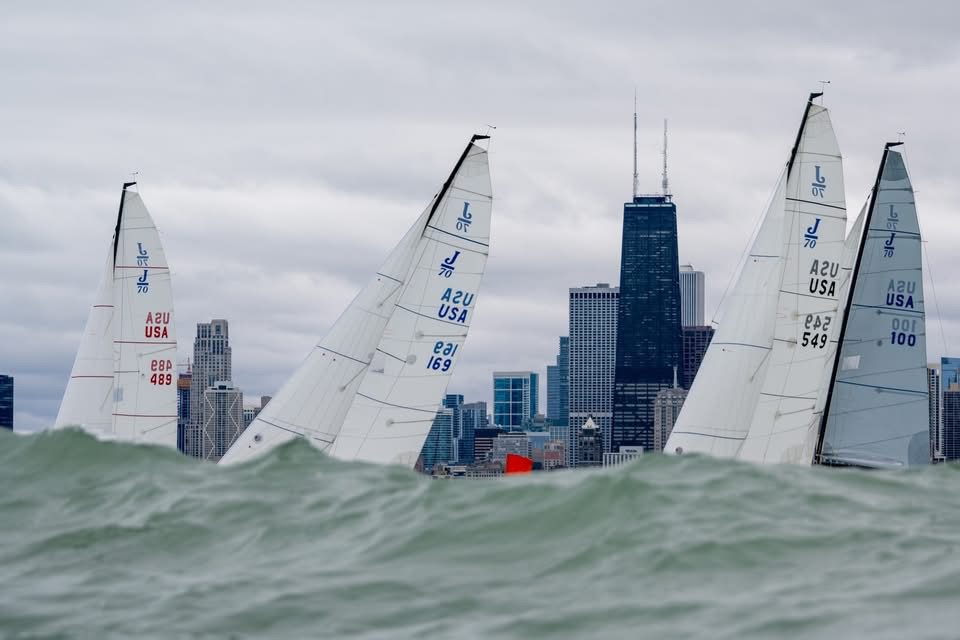
Photo credits: Doug Fritz, Chicago Yacht Club
The dominant narrative in American sailing right now feels like one of decline. There, we said it. Fleets are aging. Clubs are consolidating. The path from “I’m interested” to “I’m on the water” is, for far too many people, a path that leads nowhere. A friend of ours, Doug Fritz knows this better than most. He tried for years to break into the racing community in San Francisco. Then he tried again in Santa Cruz. Both times he found the same thing: courses that led to certifications, certifications that led to nothing, and a culture that assumed you’d had a lifetime of yacht club membership and decades spent around the buoys.
He didn’t. But that didn’t deter him. Finally, he moved to Chicago, bought a J/70 with a friend, and decided to stop waiting for someone else to build the scene.
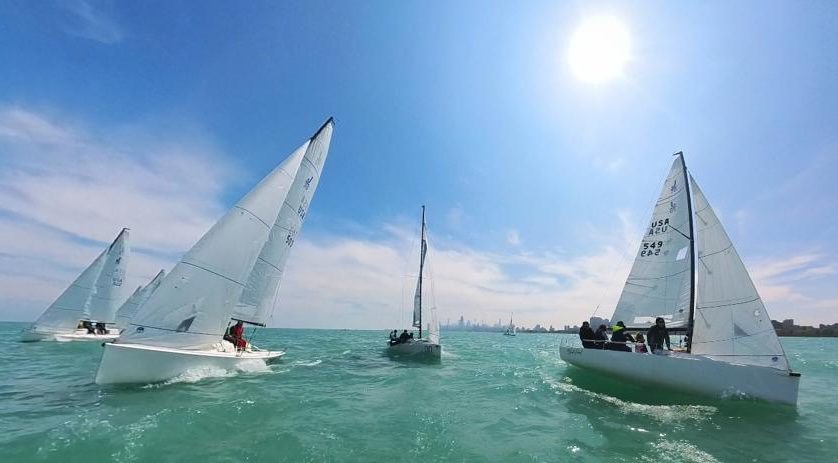
This past spring, seven J/70s lined up at Chicago Yacht Club’s starting line. More than 25 different crew members had been sailing together since the fall. High school and college sailors were crewing alongside weekend warriors. Telmo Basterra and Chuck Nevel, Chicago Yacht Club’s waterfront directors were implementing tech-enabled race management solutions and planning upcoming training nights. Naomi Jamboretz, Sailing Program Director at Lake Forest Sailing was helping to coordinate schedules and racing calendars. And world-class local sailor, John Heaton was quietly transferring hard-earned knowledge from his pro team to anyone who showed up with a willingness to learn.
None of this happened by accident. But it also didn’t require a grant, a committee, or a ten-year strategic plan. It required a builder.
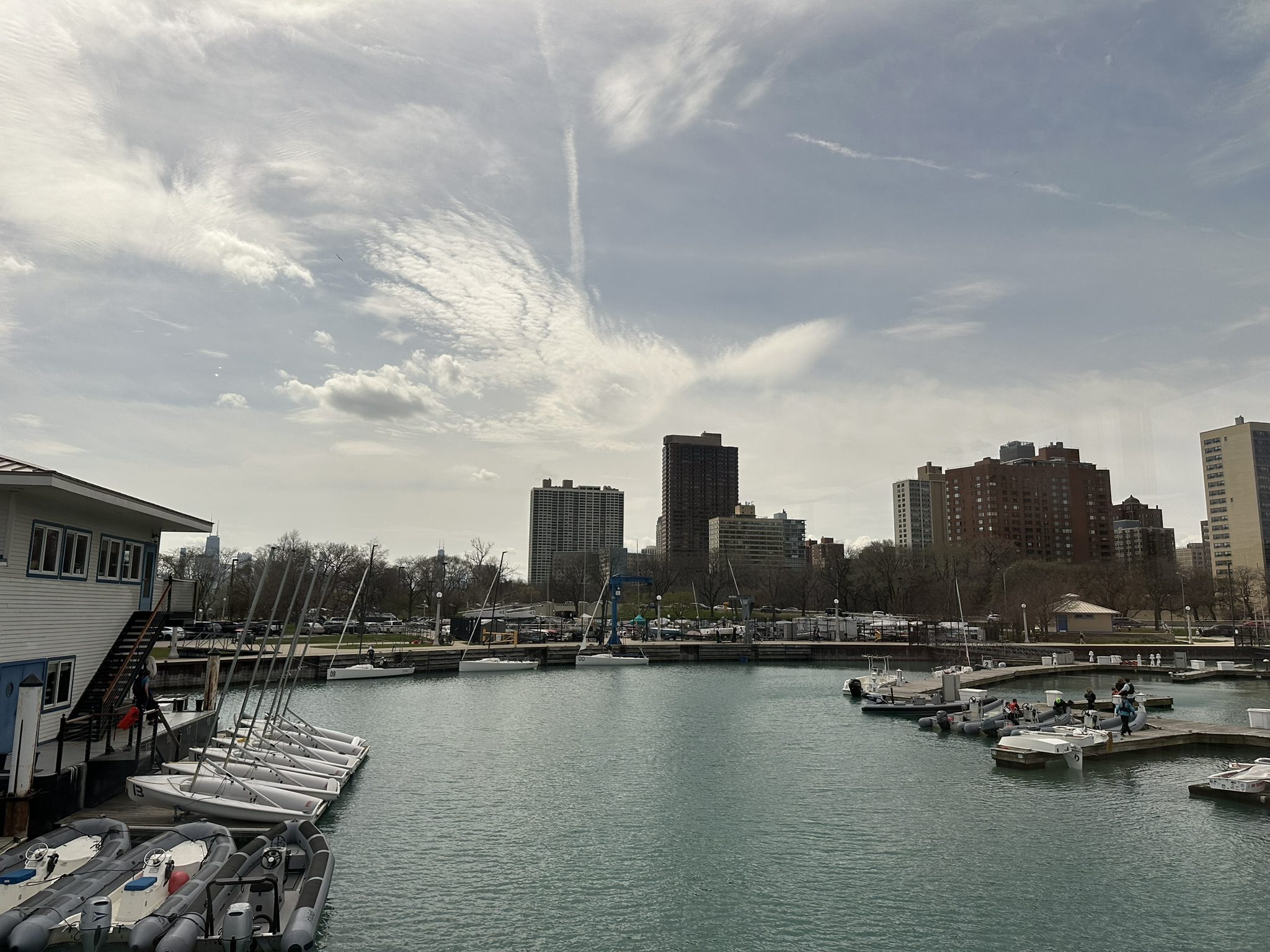
The Catalyst
Doug Fritz is the CEO of F2 Strategy, a consulting firm that advises wealth management firms on technology and growth. He is, by his own description, someone who builds things – networks, firms, communities – and who finds it genuinely hard to understand why other people don’t. “I’m notoriously guilty of trying things without asking if it’s possible,” he says. “I didn’t even want to know why it might not work. I just plow all the energy in and make it happen.”
He purchased his J/70, a used boat out of Harbor Springs, Michigan, found by a sailing friend who understood the platform, and recognized the opportunity this fleet could provide. His first regatta, the Verve Cup Inshore, was a study in barely-controlled chaos. “Thirty-five boats on the line, and I’m just thinking: I am not going to sink this thing in Lake Michigan on my first outing,” he recalls. “That was where my brain was.”
What drew him to the J/70 in particular was partly pragmatic. It’s a modern one-design with growing fleets, accessible pricing, and a national class structure that suggests longevity. But what drew him to building a local fleet around it was something older and more personal: the memory of how hard he’d had to fight just to get on the water in the first place.
“It should not be that hard,” he says simply. “There was no mechanism to take someone with means, time, and genuine interest and pull that into any kind of organization or structure. I didn’t want that to be true for anyone else here.”
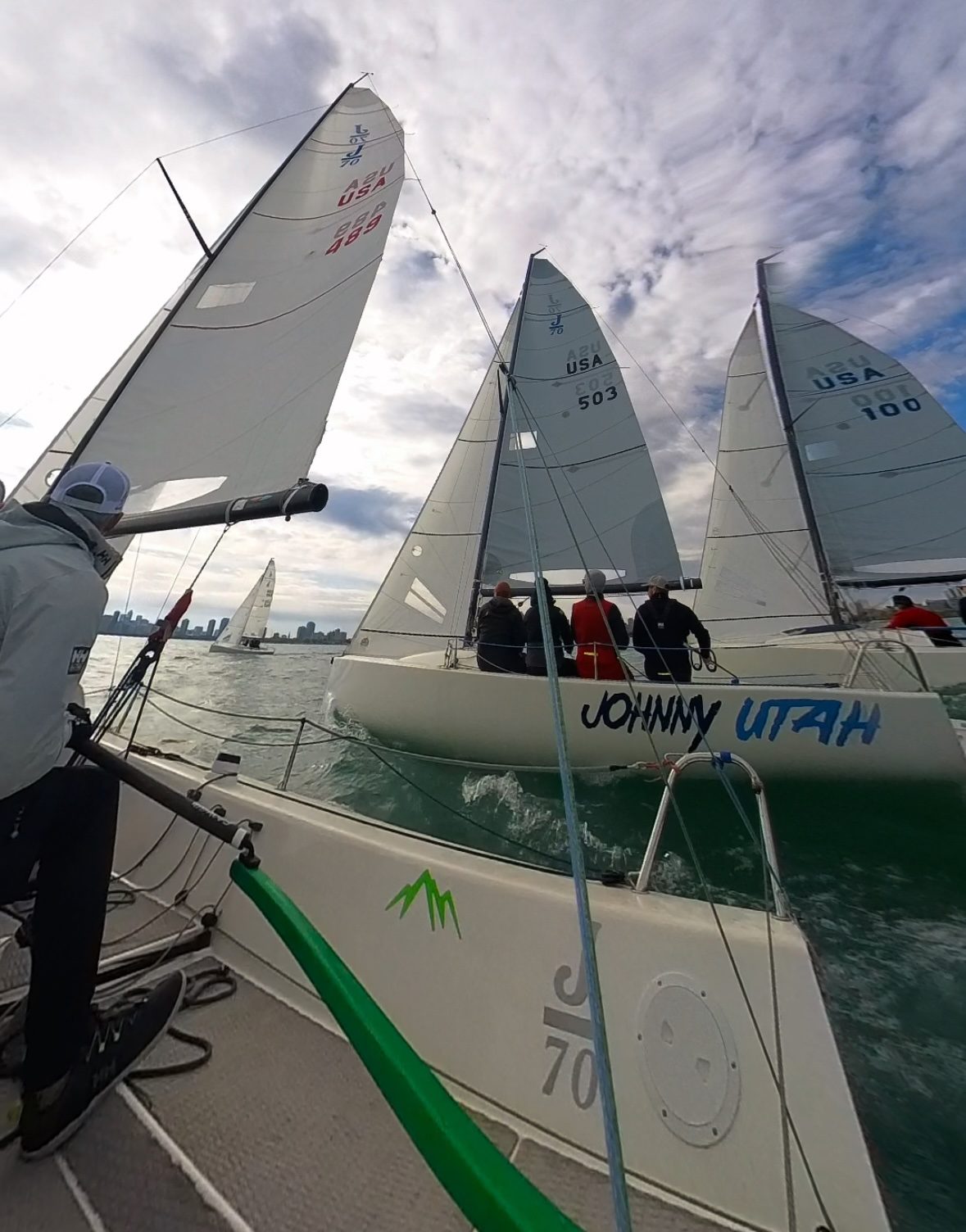
The Scaffolding
If the catalyst is a person, the scaffolding is what allows that person’s energy to stick. Doug is the first to say he wasn’t building from scratch. He was paying close attention to what Ron Rosenberg had accomplished with Fleet 17, the J/70 fleet in Seattle. “I’ve been in that thread since January,” he says. “I’m just listening to everything they’re doing and trying to replicate it.”
The first operational act was simple: a Google Sheet to organize frostbite racing and crew assignments. Not glamorous, but effective. It got people to show up, and showing up built trust. From there, the scaffolding grew: WhatsApp groups for rapid communication, a push to get the fleet onto the club’s ClubSpot platform (still a work in progress), and a deliberate posture toward Chicago Yacht Club that Fritz describes as “highly collaborative and forward-thinking.”
“I thought we might get a couple of more spots in the boat storage area. They gave us a space for twelve boats! I was blown away.” What he’d intuited, and what he suspects is true at most yacht clubs, is that a well-organized racing fleet isn’t a burden to an institution; it’s the life-blood; a membership driver, and a proof of vitality. Doug offered to be the fleet’s single point of contact, the go-to resource for answers, solving problems, and ensuring the J/70s were, in his words, “the best citizens in the harbor.” The club has responded with a resounding YES!
That institutional yes unlocked everything else: pad space for visiting boats, flexibility for out-of-town owners to leave their J/70s in Chicago for the season, a training program on weeknights. The infrastructure didn’t need to be perfect from day one. It needed to be good enough to lower the cost of participation, and then someone needed to actively lower it further, for every individual who might want in.
“If you don’t have crew, I will find you crew,” Fritz says. “I’ll take that on myself. I’ve knocked down all the reasons why you wouldn’t do this. You don’t have a place to store it? I’ve got a spot. You can’t afford it alone? I’ll find you a co-owner. You don’t know anyone? I’ll get you out sailing next Thursday.”
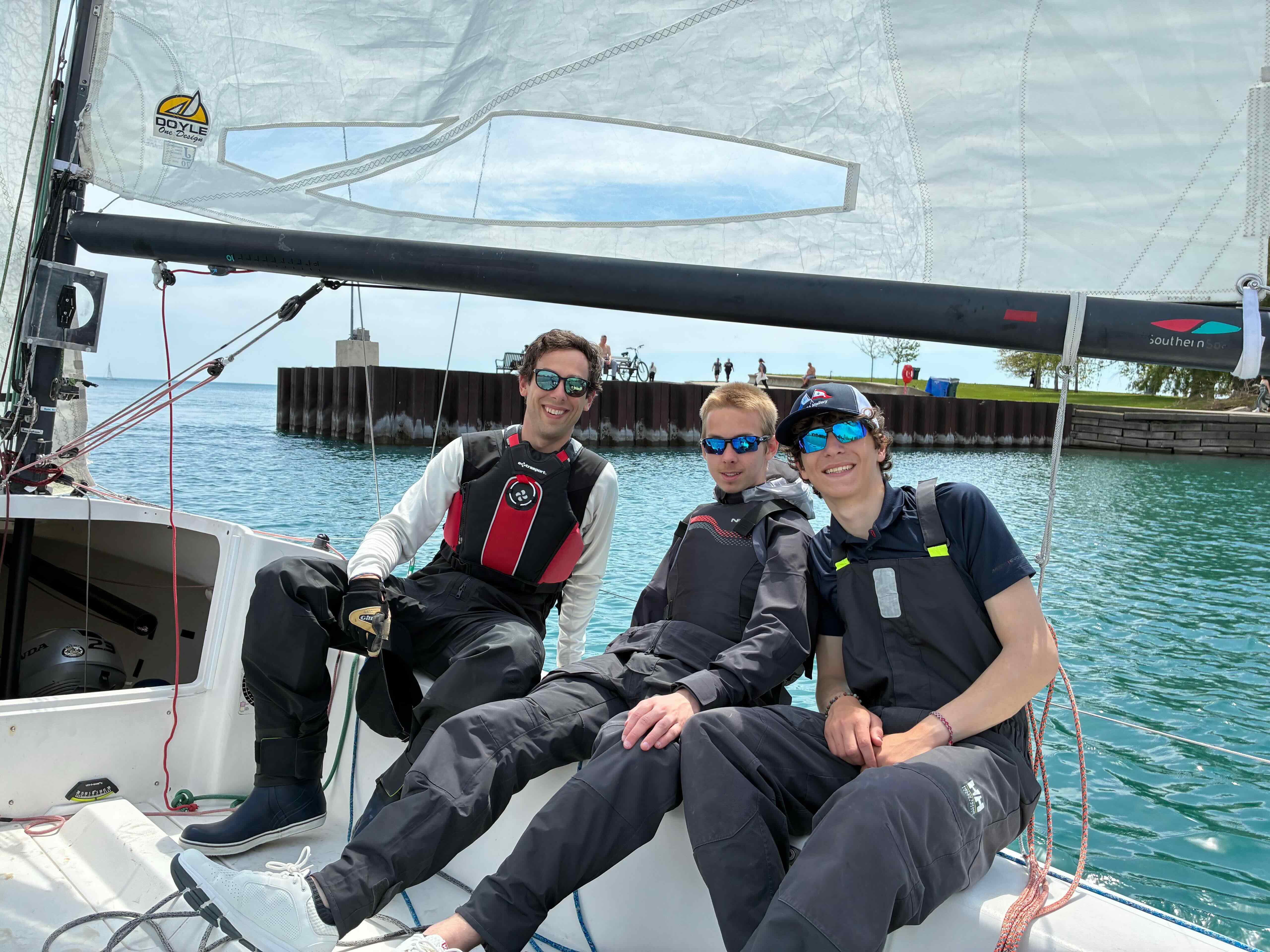
The Community
Infrastructure solves the logistics problem. Community solves the cultural one. And this is where the Chicago fleet’s story gets really interesting.
The fleet’s existing core of experienced 36.7s, J105s, and big-boat sailors with a median age somewhere in the low forties provided quality crew options, but not growth. That growth came from an unlikely source: the collegiate and high school sailing programs that exist in the Chicago area, with a direct connection to Northwestern, Loyola, and Lake Forest College, and to the regional 420 circuit.
The gap Fritz identified is a real structural failure in the sport. Young sailors who have developed genuine skill in college dinghy programs graduate into a landscape with almost no obvious next step. There’s no well-marked bridge from the 420 fleet to competitive keelboat racing. There’s no mechanism to keep that talent in the sport.
“What a massive waste of talent and resources,” Fritz says. “If I can be the connected tissue that’s missing, pulling younger, highly qualified, really excited sailors onto a J/70 and into this community, then sign me up.”
He reached out directly to Northwestern and Loyola sailing programs, found an email address on each website, and sent a simple note introducing himself as the fleet captain. Within seconds, he had enthusiastic responses. Today, the fleet has three or four high school sailors sailing regularly, a pipeline from collegiate programs, and a dedicated boat, the second J/70 in the fleet, now called Surprise, being run as an entirely youth-focused platform.
This required something from the existing competitive sailors in the fleet: a willingness to share crew, loan expertise, and occasionally lose a race to a skipper who is still learning. It’s a real ask. The competitive ego that drives people to get good at sailing can be exactly the force that keeps a fleet small and insular. Fritz is direct about the tradeoff.
“You have to balance the ego. It’s more fun if there are more boats. We are better if there are more boats. Does it mean I have to share my crew with a new skipper so they can actually develop? That I might lose a race to someone who’s technically not as good as me yet? Yeah. It might mean that. But that’s what you put in to get this conflagration of energy out of it.”
Bloom Where You’re Planted
There is a version of competitive sailing that is entirely oriented toward the away game: the big regattas, the travel circuits, the out-of-town campaigns. For many J/70 owners in Chicago, that’s exactly what the boat has been, a travel platform that sits unused between events, crewed by professionals, racing somewhere else.
What Doug Fritz has built is a persuasive argument for the other version: the home game. Fun racing on familiar water, on weekends you don’t have to fly somewhere to reach. A starting line where you know everyone’s name. A fleet where John Heaton, a University of Chicago professor who wins at the national and international level, sails alongside high school kids on a Saturday morning and genuinely enjoys the teaching.
Chicago Yacht Club’s racing staff has leaned in hard, with Telmo, a highly accomplished sailor in his own right, now leading the charge from the club’s organizing side. The club is working to use of Vakaros instrumentation to streamline race management and make the racing experience cleaner and more accessible for newer participants. Lake Forest Sailing Director, Naomi Jamboretz was the catalyst for the bridging the connection between youth and college sailors, and the J70 fleet owners.
Going forward, there are plans for a summer schedule that keeps the fleet active from spring through fall, with an eye toward eventually encouraging the fleet to travel together as a group. The local scene is becoming the launching pad and the center-piece, rather than the travel alternative.
Fritz’s long game is larger still: corporate-sponsored J/70s at CYC, a funded pathway for young sailors to keep racing past college, a fleet whose growth draws regional boats to Chicago rather than watching them stay away. He dreams about it at two in the morning, swiping through Instagram regattas from Turkey and sketching out what a Northern Trust spinnaker might look like!
But the foundation of all of it, the thing that made seven boats possible where there had been two, and 25 crew where there had been a handful, is something simpler and more portable: one person who decided to make it easy to say yes, and who genuinely couldn’t understand why anyone wouldn’t.
—
At Stephens Waring Design, we’ve always believed that the best sailing communities share something with the best boats: they’re designed with intention, built with care, and improved by the people who use them. The Chicago J/70 fleet is a case study in exactly that kind of purposeful design, applied not to a hull, but to growing a thriving harbor culture.