
Built For Maine. But off to Bermuda.
Todd LaLumiere, Isobel, and the Newport Bermuda Race
There are boats you design and then let go. You hand them over and hope the next chapter treats them well. Sometimes it does. Sometimes you hear things through the grapevine: a headstay with a meter of sag, what’s left of a rig on the hard in St. Martin, a mast on the bottom of the Caribbean. You try not to think too long or hard about what could have been prevented.
Isobel is one of ours. Bob and Paul designed her for a client they’d known for years, a man who’d commissioned three boats from the firm and explored many more in concept.
She changed hands once after that. The new owner had different ideas about what a boat like this was for: bigger crew, faster racing, and a little less of everything else. But a badly tuned rig, pushed harder than necessary, eventually turned into a headstay that was carrying more than a meter of sag over a twenty-two meter span. When you design a headstay, you engineer to a three-times safety factor over predicted load. The chainplate gets one-and-a-half times that. It sounds like a lot until a boat is punching into ten-foot Caribbean seas with a rig that hadn’t been set up right in nearly two years. Abused by fatigue, the chainplate let go off St. Martin in the spring of 2022. The mast went over the side. The owner looked at what it would cost to put the boat right, said he was finished, and put her on the hard.
That’s where Todd LaLumiere found her. And where our story begins.
———
Todd’s friend Tommy watches the salvage sites the way some people watch baseball. Every day, compulsively, waiting for something to happen. One morning Todd woke up to a text: a photo of Isobel on the hard in a St. Martin boatyard, the stump of her mast pointing at the sky.
He called his friend, Martha Coolidge, who had done the interior styling and knew the first owner well. Should he go down? Martha said yes, fast, the way you do when you already know the answer. So he flew to St. Martin, put his wife up somewhere nice, and took her to see the boat.
Getting aboard meant climbing a wooden ladder up the side of the hull. Not a real ladder. The kind you’d find outside a construction site, propped against pallets, with the rail sitting twenty feet off the ground. His wife made it to the top. She sat in the saloon, looked around, and didn’t say much. She wasn’t sold. But she wasn’t a hard no, either.
A cash transaction was negotiated on what was considered technically salvage, which meant an uninsurable boat with a long delivery home. If they lost her on the way, they lost her.
———
Getting Isobel back to Annapolis involved six hundred gallons of fuel in bladders, a makeshift mainsail made from a cast-off old sail and a length of salvaged aluminum stick lashed to the left-over stump to hold the VHF cable up. Thanks to that jury rig, she picked up a knot or two on the reaches. In the Gulf Stream a big sea threw the helm hard over, the rudder went past the stop, and the arm knocked the autopilot motor clean off its mount. It was hand-steering for the rest of the journey north.
The saildrive quit just as they were pulling into the slip at Jabin’s. Forward gear gone. They reversed into the dock. But most importantly, they were home.
What followed was a long string of repair bills. A transmission off eBay. A breakdown in the Delaware Bay and a $10,000 haulout to go with it. A Steyr factory floor model, sold without warranty because there wasn’t another saildrive to be found, air-freighted over at more cost than the part itself. Finally, they got to Maine that October. Camden first, then Brooklin, then out of the water.
The mast took the longest. Todd had signed with a spar builder in Detroit who had a good reputation and took deposits from Todd, Brooklin Boat Yard, and from a number of other people. And then promptly went bankrupt. What arrived was a hollow tube and a hollow boom. No fittings. Nothing. Undeterred, they started over, taking the work to Front Street Shipyard, and missed an entire season in the process.
The summer after that, they found a crack in the port chainplate. Eight more weeks on the hard. Bob and Paul designed a new fitting in proven composite. Lyman Morse did the work.
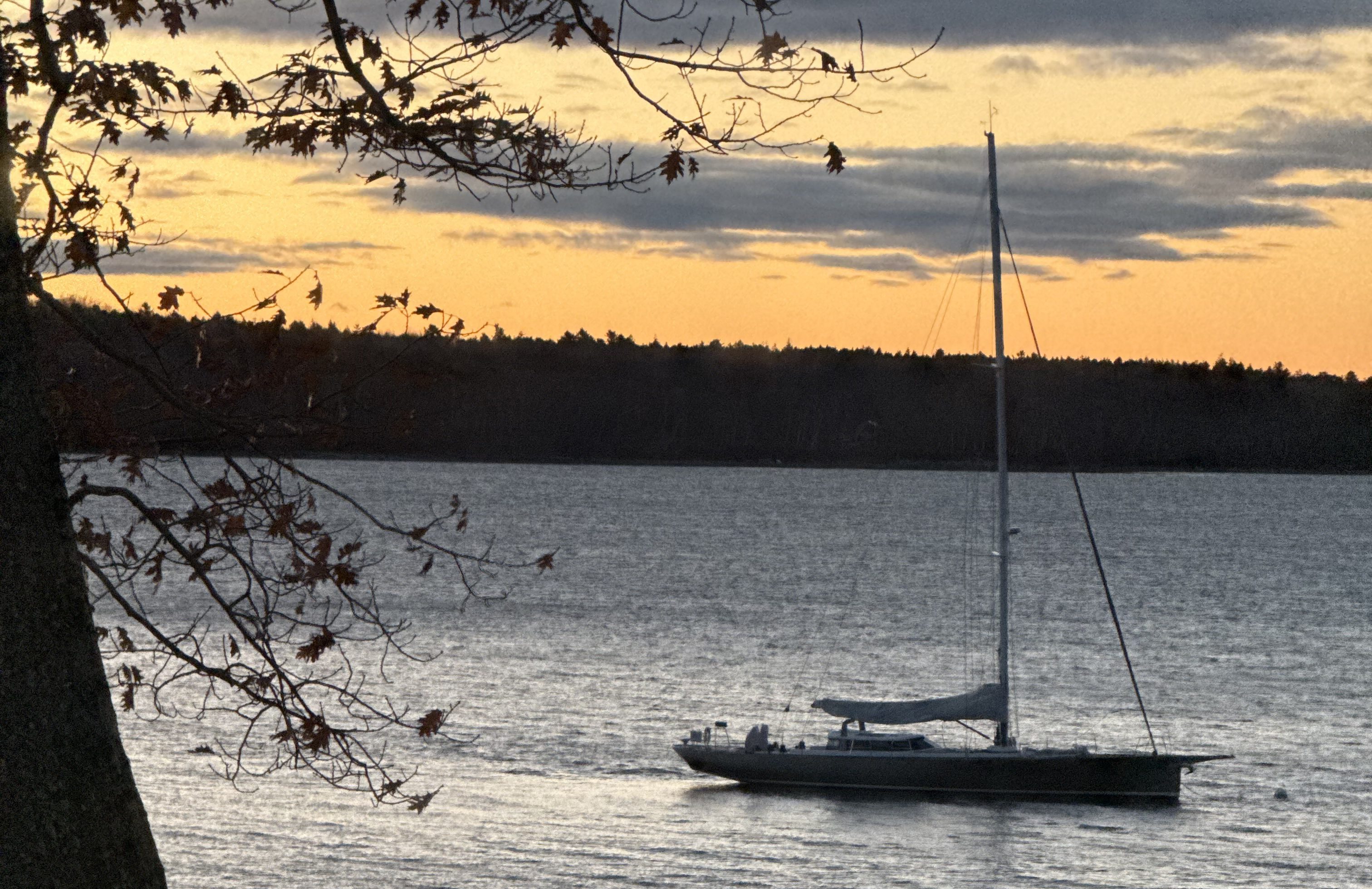
She finally sailed properly that November, running in a half gale through Cape Cod Bay, hitting sixteen knots, light and narrow and faster than she had any right to be.
———
Her boat captain, long gone at this stage, even tried to sell back the hardware he’d taken off the boat. Not surprising, really. Just one thing after another.
And then, one day, no more things.
———
Todd said something a few weeks ago, sitting in Annapolis in early June, that stuck with us. “I think today was the first day that there’s no more rebuilding. No more stuff that’s going to take us out for the season.”
Isobel has six new 300-amp lithium batteries. Zeus alternators managed from a phone. A new carbon rig. A full sail inventory: main, jib, a tweener that flies off the bowsprit track and sits between a code zero and a large headsail in character, covering the close-reaching angles she loves best. A watermaker. Air conditioning that ran for four days off the battery bank without touching the generator.
And now she’s finally racing to Bermuda.
———
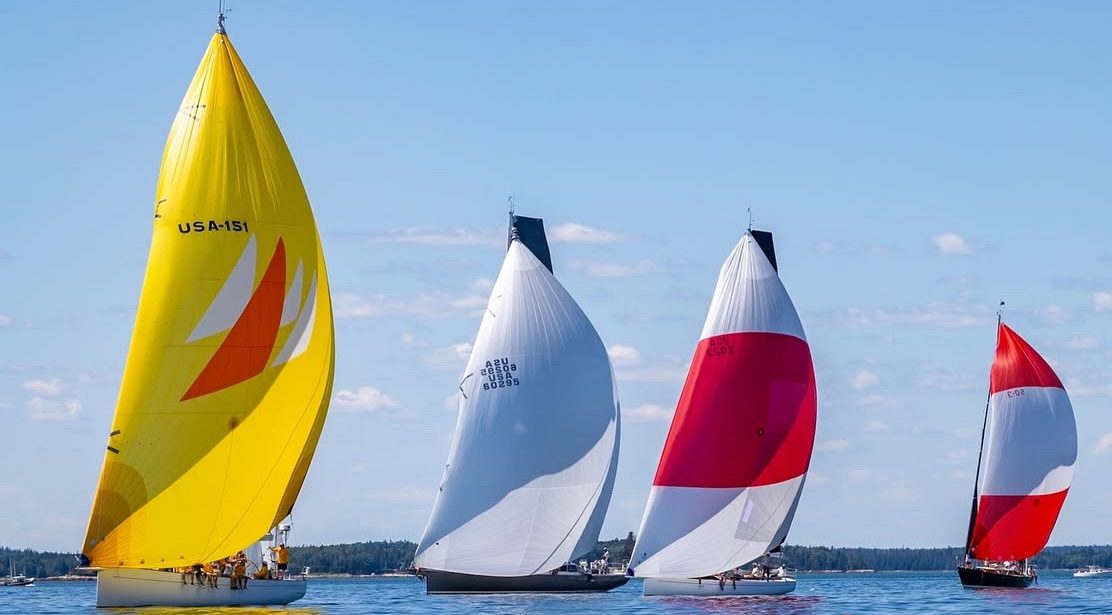
The Newport Bermuda Race starts on Friday, June 19th. It’s the third time a Stephens Waring design has entered. Bob raced Goshawk in the Gibbs Hill Division in 2006, and Hoi An years later, and now Isobel, which is both the newest boat in this sequence and the oldest story. She’ll race in Gibbs Hill One, the professional division, because she has hydraulics that can’t be manually-pumped. There’s something funny about that: a Maine cruising boat, light and narrow, built for fog and lobster pots and the reach from Camden to Castine, racing offshore against purpose-built machines.
The crew is a family affair. Todd’s three sons are aboard. His son-in-law Colin, a multi-time Brown All-American and Fort Lauderdale Yacht Club Hall of Famer, will join them in Maine this summer when they’re back. Local legend Richard Hallet is on the crew list. It’s a real program. And it’s going to be an amazing journey.
———
When the bills were piling up and the mast was still a stump and nothing worked the way it was supposed to, Todd’s youngest son Charlie said: Dad, they totaled her for a reason.
He wasn’t wrong. He just didn’t know yet what his father knew: that some boats are worth exactly what they cost you, and that the cost is never really about money.
We’ll be tracking her all the way to Bermuda. We couldn’t be more excited.
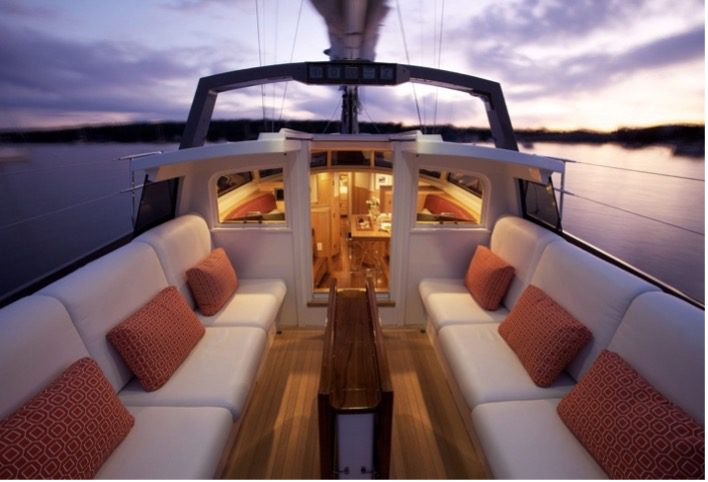
Photo above, courtesy Alison Langley. Others courtesy of owner, Todd LaLumiere.