
The Fuss-to-Fun Ratio.
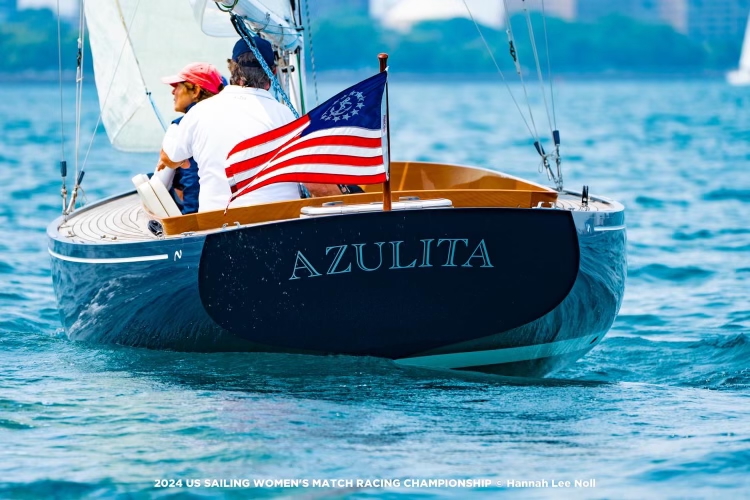
We took Azulita out onto Lake Michigan on a crystal-clear day. Blue sky with fifteen to twenty knots out of the northeast meant the sea was quickly building to three and four feet. Good conditions to find out what she’s made of. John offered me the helm. I sheeted in the sails and put her to work, beating to weather through the chop and breeze with only the odd splash coming over the coaming. After one of them John looked back with a cheeky smile, “Come on, Adam, we’re not racing!”
He was right, and he wasn’t trying to win. Because to be honest, he already had. The helm was light and perfectly balanced, the kind that asks to be put to good use. She made the steep wave-sets feel effortless, responding to the occasional sharp input and rewarding active driving through the chop. I told him so. Then after a mile or two, we eventually eased the sheets, taking the downwind leg home as reward, sliding down the faces of the waves easily at speed. As most readers know, working to weather in a boat as balanced as this one, well…it’s hard not to make the most of her.
That small exchange holds most of what you need to know about John Laing and his boat. There is a number John keeps in his head, and he calls it the fuss-to-fun ratio. Lower the fuss, raise the fun. He came to value it the hard way. John ran crisis communications at Burson-Marsteller and elsewhere before he began teaching business ethics at Northwestern, a working life spent inside other people’s most complicated days. When he went looking for a boat, he was not looking for a project. He wanted the best parts of sailing and not much else to get in the way.
Azulita gives him that and more. He and his partner Bonnie, an art dealer at the time, found her at a boat show, and they saw two different boats in the same hull. “Bonnie saw a work of art, I saw artful lines,” John says. “Together we’d found perfection.” She was reading the finish and the proportions, the considered beauty of the object. His eye went to the shape, trained by years of admiring classic boats like the U22, a Knud Reimers design commissioned by the Chicago Yacht Club in 1953.
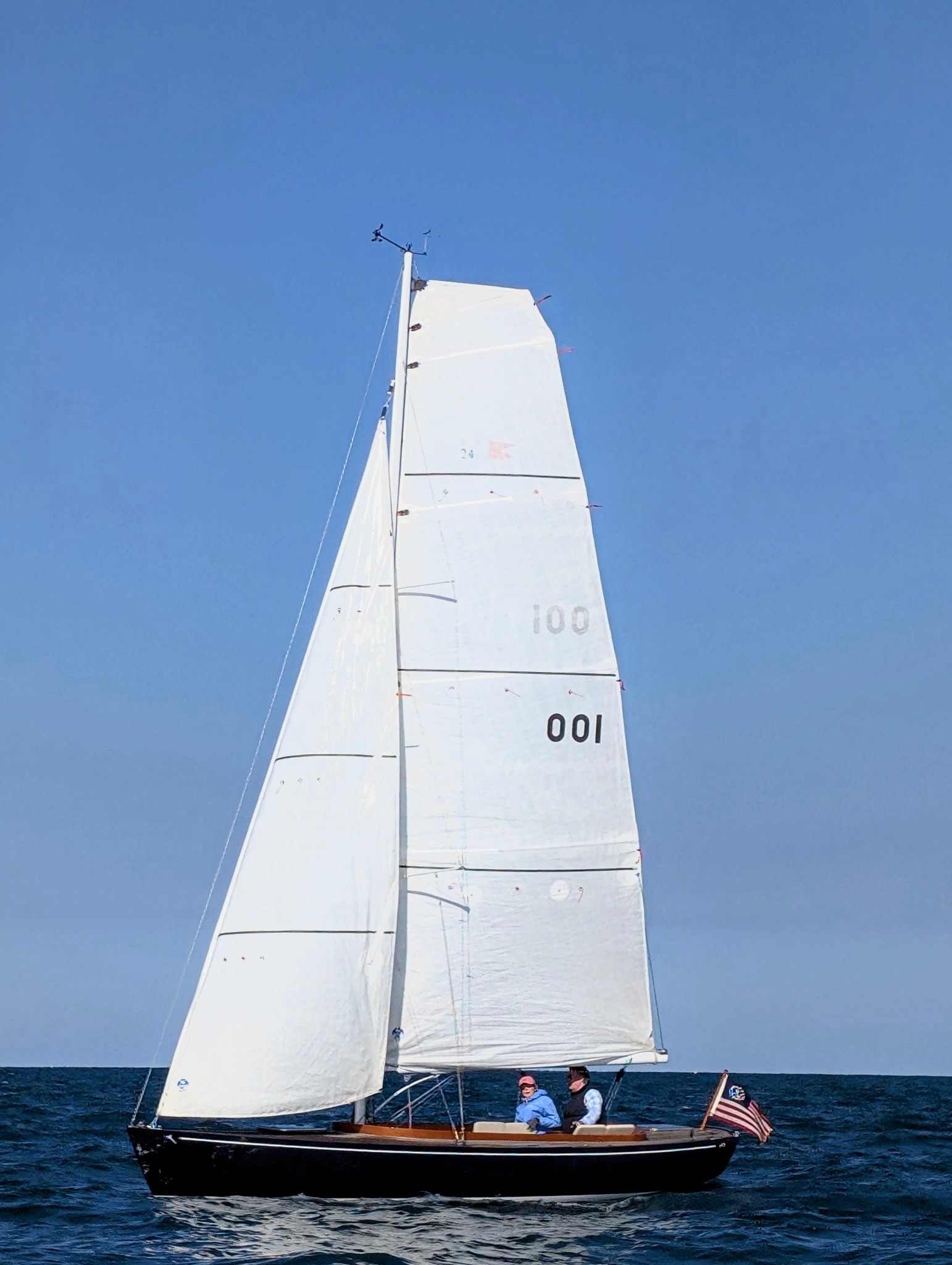
He recognized in Azulita what makes Bob and Paul’s designs inspiring, and most importantly, where they step away from the classic script. She carries some overhang, though far less than most traditional daysailers. She sits on a good working waterline, with topsides that flare just enough to throw spray clear and keep the deck dry. Her beam runs well aft to a broad transom, giving her the stability and the power to carry ample sail area. The beauty is in the restraint. Both John and Bonnie were right, which doesn’t always happen with boats.
Bob and Paul drew her for the Northwest School of Wooden Boatbuilding in Port Townsend, on the idea that a lot of people would want a boat like this: classic enough to stop you on the dock, modern enough to sail well, simple enough to own without ceremony. The boats meant to follow her never got built. The marketing was thin and the moment passed. So Azulita is something of a one-off by accident, a fully worked-out idea still waiting for its crowd on the day John walked up to her.
What he saw was a reductive, but highly intentional boat that takes things away on purpose. No cabin. No head. Nothing below but air and a place to stow the sails. Carefully engineered systems that live in the background to make owning and sailing a little bit easier and a lot more fun. To John it was the whole appeal. He had come to sailing partly through Tom Cunliffe’s Hand, Reef and Steer, the old bible of traditional seamanship, and he liked craft that ask something of the sailor without punishing him for it. Azulita asks the right amount.
You can see the ratio working before you leave the dock. John and Bonnie live just south of Belmont Harbor, off Lincoln Park, with Lake Michigan in the window. They read the breeze from the kitchen. If it looks good they’re at the harbor in minutes. The boat is rigged so there is nothing to fight: dock lines cut to length, mooring whips holding her where she belongs, an electric Torqeedo inboard that idles them out quiet and clean. From the window to the water is ten minutes. That figure is the philosophy, stated as a number.
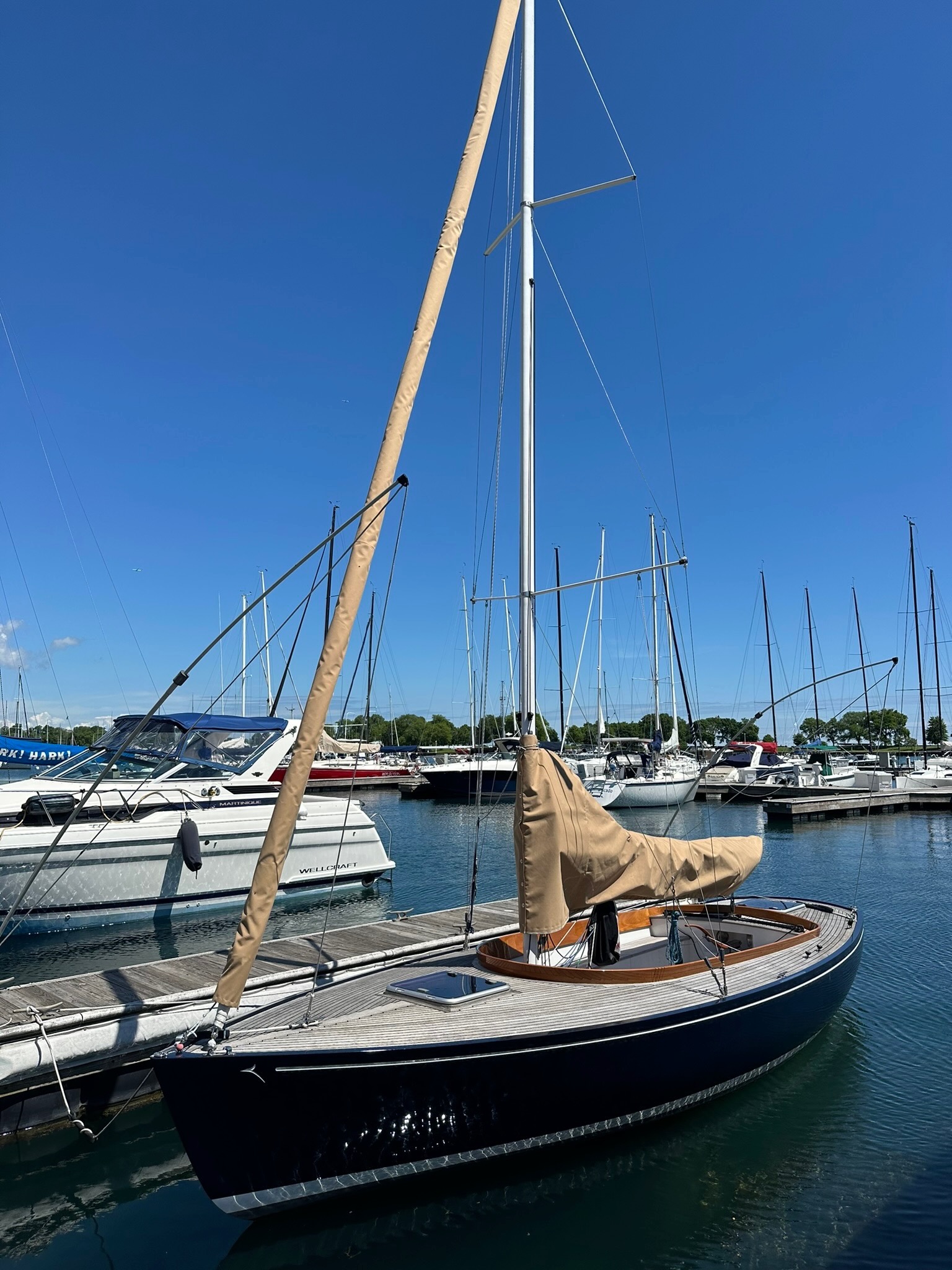
Lines are led back to two winches at the forward end of the cockpit, close to hand. The rig is built for ease: a backstay-less mast and a fat-head main that twists off and depowers without a fight, so a building breeze stays fun instead of turning into work. The details have stacked up over the years, a better headboard, bat-cars and lazy jacks that make the main painless to raise and drop, a shore-power connection that keeps her topped up. She is always ready to go. That, too, is deliberate.
Bob and Paul will tell you the ratio John named is one they have been designing toward for years, even without a name. Take away unnecessary elements that the sailor won’t miss. Engineer what remains so it quietly disappears into the background. What’s left is the part worth having. Azulita happens to be one of the purest expressions of it they’ve drawn. It only took an art dealer and a man with a number in his head to walk up to her and recognize it immediately.
The ease of use is all in service of John, Bonnie and their guests. Friends fly from far and wide to go sailing. The grandchildren have taken to her, too. John’s grandson, at the University of Illinois, is a regular hand. His younger sister, a high-school freshman, has been out enough times and loved it enough that John is taking care of her and a friend with lessons at the Chicago Yacht Club this summer. He lights up talking about it.
Bonnie’s version of the ratio is simpler than John’s: high fun, high beauty. Chicago supplies the beauty without being asked, the skyline standing up behind the sails on some of the best sailing water in the country. And when the day is over, they are in no hurry to leave.
“Sometimes we come down to sail her,” John says. “Other times just to polish and make subtle adjustments. But every time, we can’t help but look back just one more time. A last gaze of the day, until next time.”
Photos courtesy of John Laing. Image by Hannah Lee Knoll.