
The Things We Live With.
There’s a question we come back to on every project, no matter what we’re designing.
Not: “How does this perform?” Though performance matters enormously. Not: “How does this look?” Though beauty is never incidental. The question is simpler and harder than either of those: What will it feel like to live here?
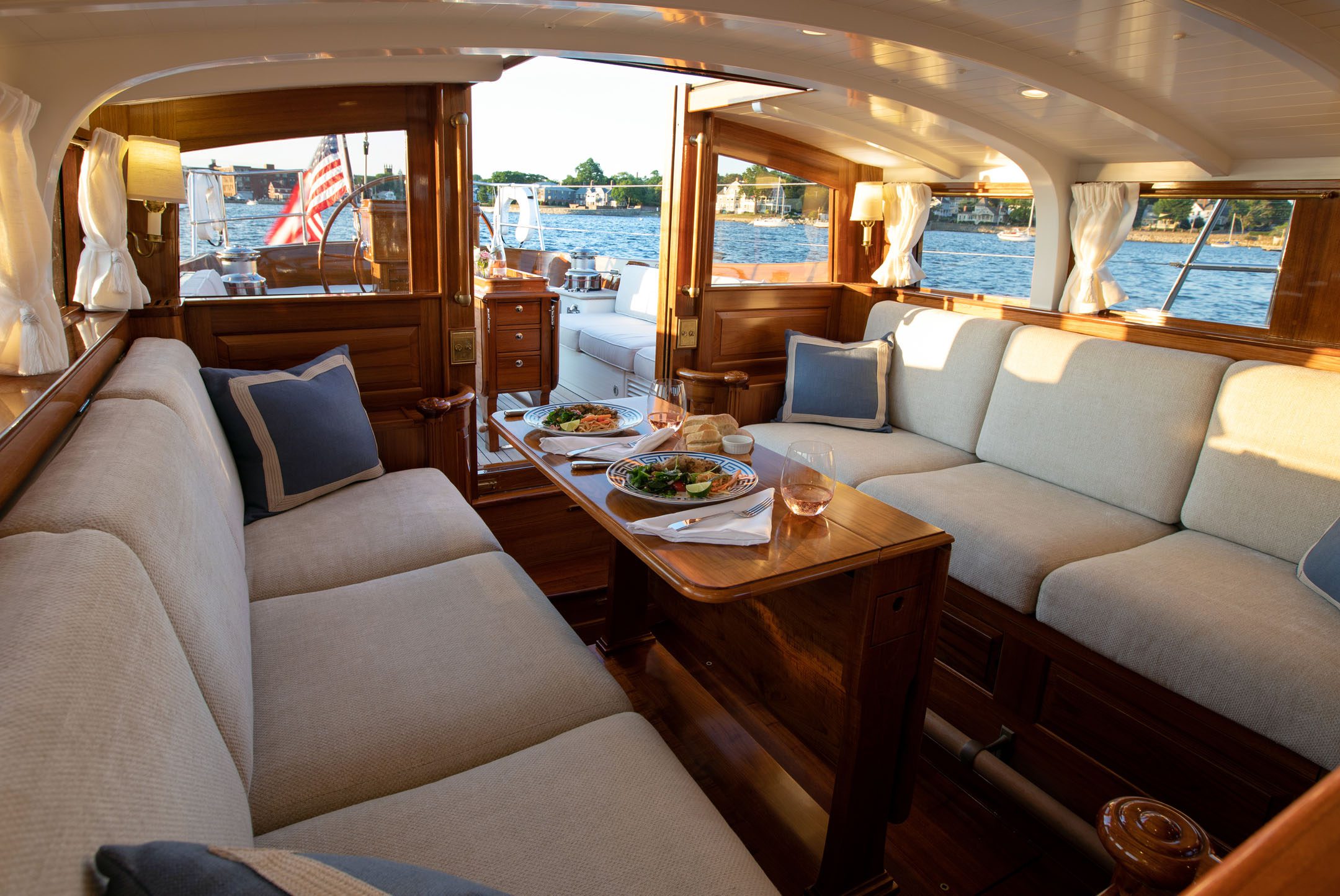
We’ve been asking that question for more than thirty years, mostly in the context of boats. And boats are a remarkable laboratory for design, not because they’re small, although constraint can always clarifying, but because the people who commission them are unusually clear about what they want.
They know which light they want at anchor in a Maine cove on an August morning. They know the texture they want to reach for when they open a cabinet door in the dark. They have opinions, sometimes fierce ones, about the height of a settee, the weight of a hatch, the grain of a piece of teak. They’re not buying a boat. They’re commissioning a way of being in the world.
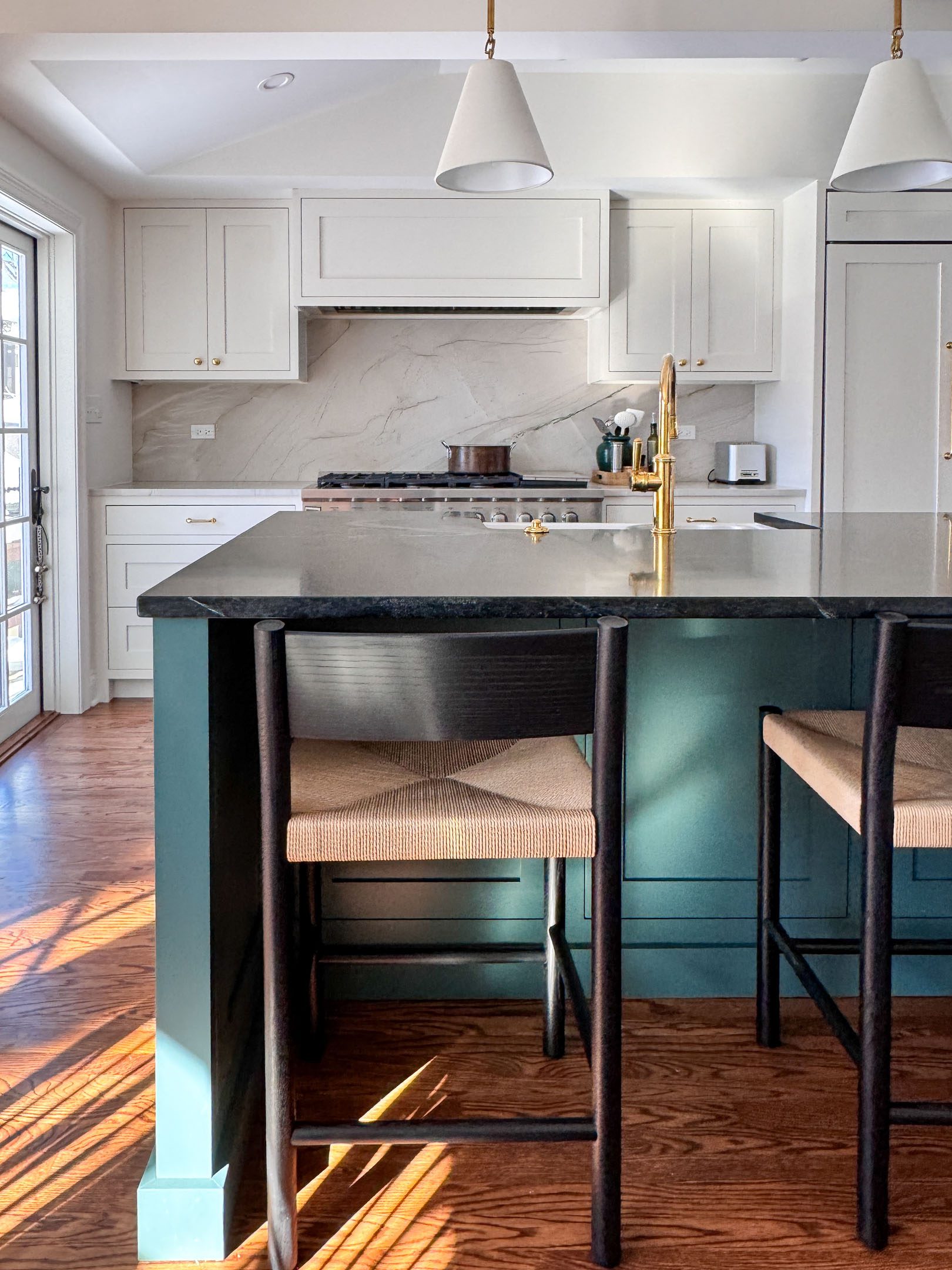
That clarity — that insistence on the personal and the specific — is what makes our design work interesting. It’s also, we’ve discovered over years of conversation with clients, exactly the same thing that drives the best residential projects. The homeowner who comes to us for a kitchen renovation in a Portsmouth, Condo, or a great room in a house in Stonington, is asking the same question the yacht owner asks: “How do I make this space mine?”
It’s not about boats versus buildings. It’s about the difference between a space that was designed for someone and a space that was built for anyone.
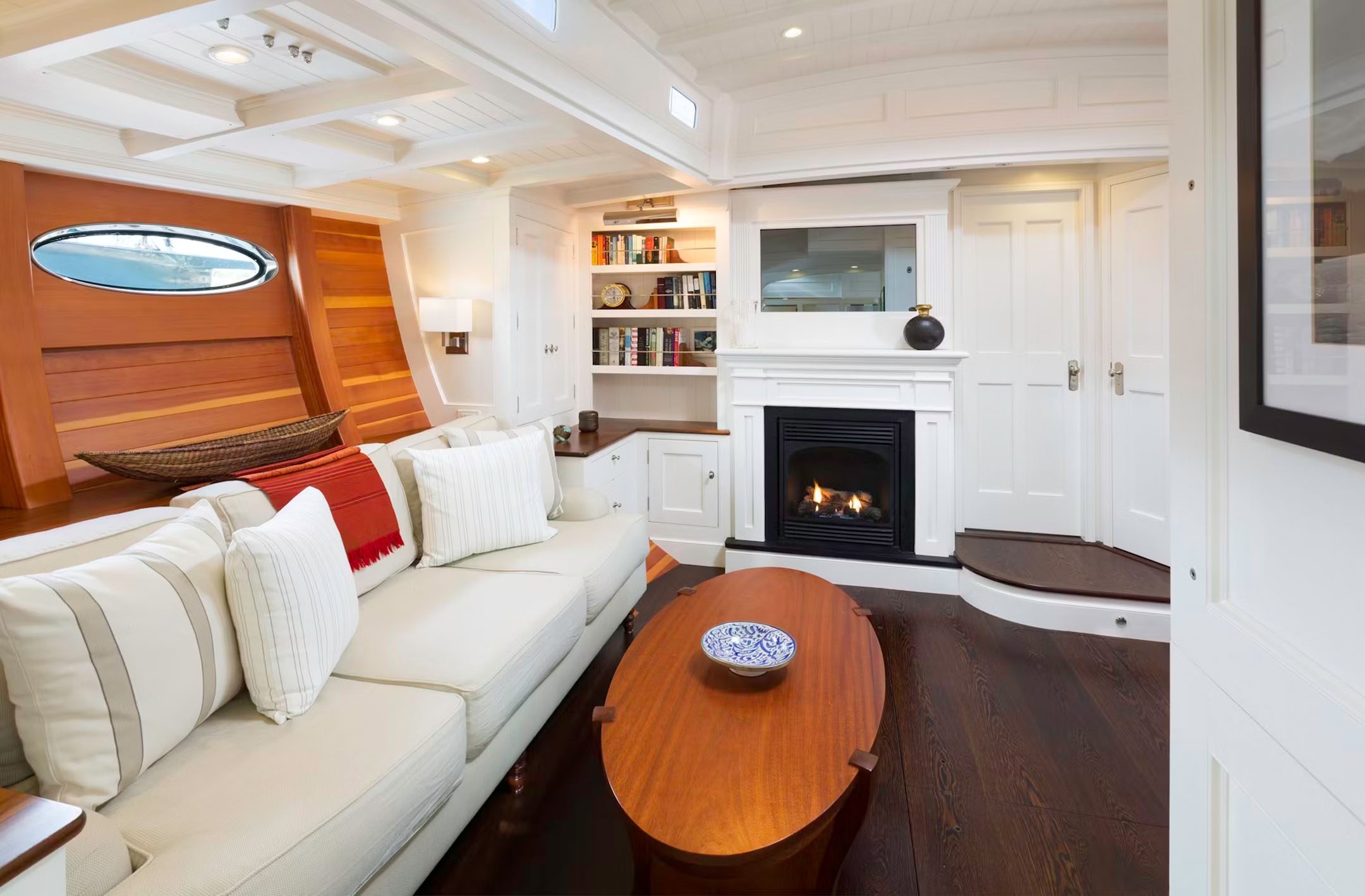
Design at this level is intensely emotive. It lives in the specific; the warmth of a particular wood grain, the way a window frames a piece of coastline, the sound a door makes when it closes. It’s about texture and proportion and the way a room behaves at different hours of the day. These things don’t announce themselves the way a floor plan does. They accumulate. Over time, they become the difference between a space you inhabit and one you merely occupy.
What we bring to every interior project, whether the floor beneath it is fiberglass or stone, is a process for uncovering what those specific things are for each client. And then the technical and aesthetic rigor to execute them without compromise. We’ve spent decades learning how material choices behave under stress, how systems can disappear into a design rather than interrupt it, how the smallest decision reverberates through a space.
That knowledge doesn’t stop at the waterline.
If you’re a builder with a project that’s asking for something more than your current team can bring, we’d like to talk. If you’re an owner with a space that’s almost right but not yet, we’d like to hear what’s missing.
The conversation starts the same way it always does; with a simple question, what it will feel like to live here?