
The Modern Classic Division: Racing’s Most Accessible On-Ramp
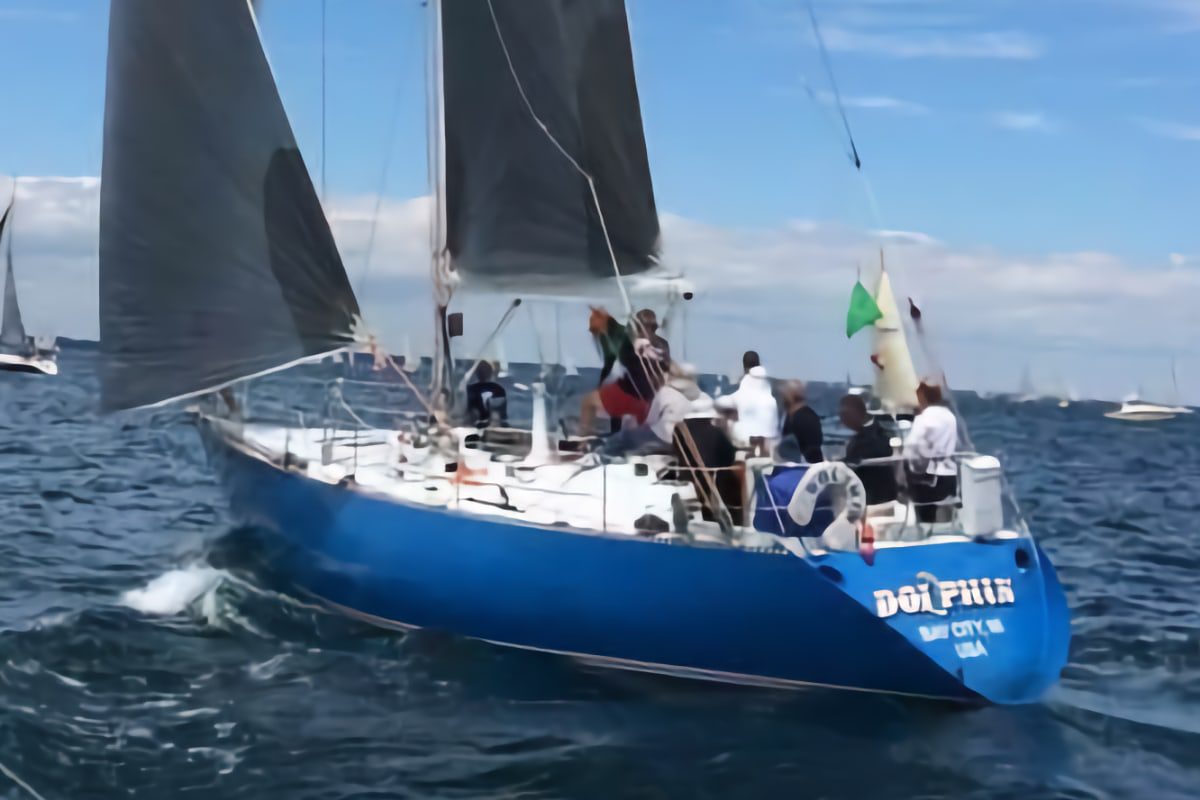
By Bob Stephens | Stephens Waring Design
Classic yacht racing is having a moment. As conventional sailboat racing suffers from dwindling participation, the enthusiasm of owners and sailors of older classic sailboats has only increased, and the result is a series of vibrant regattas along the northeast coast of the US and in Europe. Here in the States, the crown jewel is the Eggemoggin Reach Regatta in Maine, which routinely draws over 100 wooden boats to its starting line the first Saturday in August, for forty years running.
Think of classic yacht racing and you might picture varnish gleaming in the sun, gaff-rigged sloops and schooners sliding gracefully along, lengthy overhanging bows and sweeping teak decks. You might think you’d have to arrive with a hundred-year-old family heirloom, handed down by your father’s father. And you’d be partly right. That’s one part of the circuit; the thrill of watching historic relics, impeccably maintained and restored, fight it out in the Classic and Vintage divisions.
But another part of the circuit is more accessible to participants whose surnames aren’t associated with the Gilded Age, and to those whose ambitions don’t include mastering the art of laying down coat after coat of varnish to preserve century-old mahogany. It can also provide a thrilling ride in what were last generation’s high-performance speedsters.
The Governing Framework
The governing body of classic yacht racing in the US is the Classic Yacht Owners Association (CYOA). This organization establishes the guidelines for racing these boats and organizing the regattas in the circuit. It provides the rating system that handicaps the boats – the CRF, or Classic Rating Formula – and defines the makeup of the classic racing fleet by parsing boats into appropriate divisions. Stephens Waring has been a proud supporter of the CYOA since its inception in 2016, and we volunteer on its Technical Committee to help sort these questions.
The typical picture of classic yacht racing – gaff rigs, varnished topsides, full keels – describes those yachts competing in the Vintage division (boats built prior to 1950) and Classic division (prior to 1980), with wood or metal construction and full keels with attached rudders. The Spirit of Tradition division (where Stephens Waring has built its reputation over 30 years) embraces recently-built boats featuring classic style with modern construction and design. The Contemporary division continues to encourage wood construction in fully modern design.
But it’s the last division that we’d like to tell you about today, one that can offer exciting racing, respect for retro style, higher performance than a full-keel classic, and –perhaps most exciting– an accessible way to sail in a fleet that includes Herreshoffs, Fifes, and hundred-year-old icons of yachting history. All without committing to the stewardship of an heirloom or the yard bill that comes with it.
Enter the Modern Classic Division
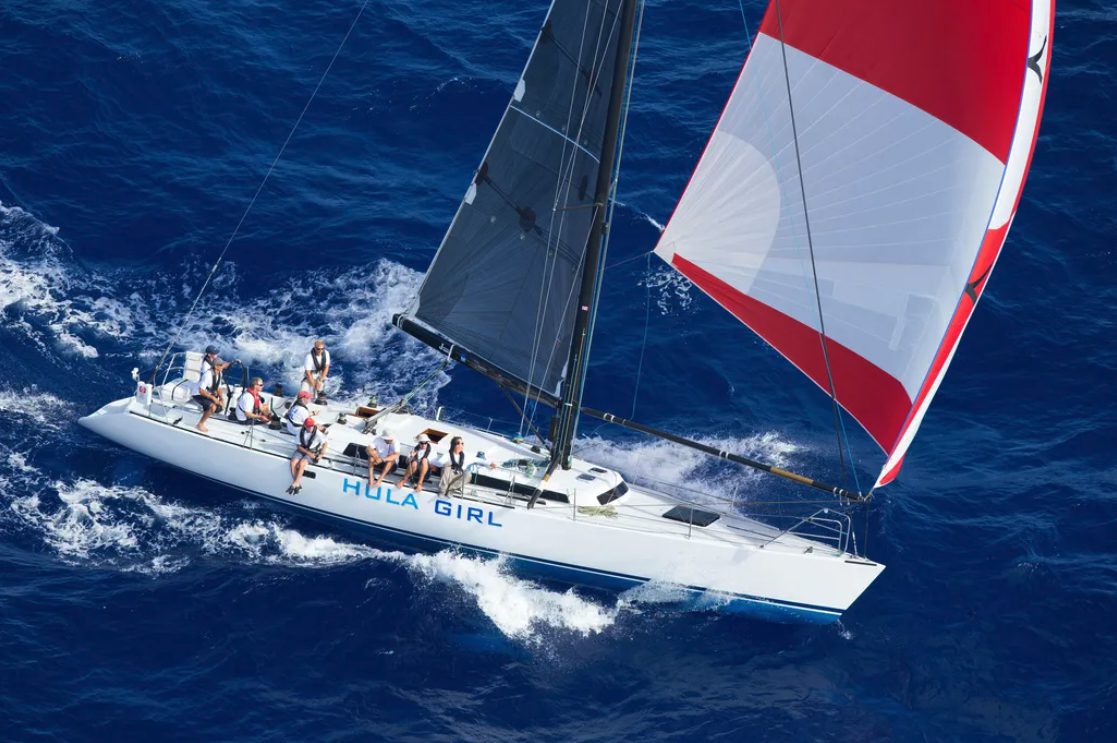
The Modern Classic Division accommodates boats of several sorts: replicas of older designs built in more modern materials, classics that have been modified. But the core of the division is intended to recognize vessels designed more than a generation ago, specifically after 1950 and before 1980, with rudders separated from their keels.
This eligibility window encompasses many production boats from the late CCA era and the IOR era, the “classic plastic” generation. Many cool boats came from that time period, and many are still around, still in decent shape, and still a blast to sail and to look at. Best of all, the price of entry can be very reasonable, and the choices about how far to take a restoration or update are as engaging as with any older plank-on-frame classic.
The opportunity exists to simply wash off the mildew and throw some new sails aboard or to dive headlong into full restomod territory, bringing back a 1970s racecourse weapon with a modernized deck layout, state-of-the-art rig and sails, and deluxe cruising accommodations below. The range of ambition and investment is entirely yours to define.
Racing Is Evolving – and That’s Good News
There’s another reason the timing is right for the Modern Classic Division, and it has less to do with the boats than with the racing itself.
For decades, competitive sailing optimized for a particular kind of participant: experienced, technically focused, with a crew willing to grind. Windward-leeward courses, pin-end starts, tactical intensity at every mark – this is racing at its sharpest, and it remains thrilling. But it also created real barriers. A guest who’d never been on a sailboat, a spouse who wanted to see the coastline, a curious friend along for the day – none of them would find much joy jumping in while attempting to pull off high-stakes mark roundings, with their accompanying jibe-sets and “vocal” crew-work to say the least.
Classic yacht racing has quietly charted a different course. Pursuit starts, where slower boats go first and faster boats follow, with the fleet naturally converging toward the finish, are increasingly common on the circuit. Rather than chaotic pin-end battles, the start becomes a rolling procession. There’s time to look around. There’s room on deck, and to windward, too.
Beyond the starts, courses themselves are evolving. Point-to-point races that thread through islands and past headlands – what you might call “tour of the bay” events – are gaining ground alongside the traditional windward-leeward format. These are races that reward seamanship and boat speed over pure tactical chess. They’re genuinely scenic. You might round a lighthouse or thread through a working harbor. The Eggemoggin Reach Regatta, to name the most storied event on the Maine circuit, has always been as much about the gathering as the racing – a fleet of beautiful boats reaching across one of the most spectacular stretches of water on the East Coast.
All of this matters for the boats in the Modern Classic Division. A 1973 Swan 44 or a 1980 Santa Cruz 50 on a scenic coastal reach, with guests on the rail who aren’t expected to know what a jib lead is – that’s a compelling picture. These boats, with their more comfortable deck layouts and genuine interior volume, are well-suited to this style of sailing in a way that a stripped-out one-design racer simply isn’t. And a restomod refit with new sails, updated deck hardware, and refreshed accommodations makes even more sense when the goal is exactly this kind of day on the water.
In short: racing is getting more inclusive, more scenic, and more fun for everyone aboard. The Modern Classic Division is a natural beneficiary.
A Quick Tour of the Market
The brokerage market holds a wide variety of candidates. Here’s a brief scratching of the surface, from turnkey to full-restomod opportunity.
A solid, pretty-much-turnkey cruiser with plenty of potential on the racecourse. Jump aboard and go, or sail for a season while you imagine the tweaks you’d want to make on deck and below. Designed by British great Ron Holland, the Swan 371 has genuine pedigree and turns heads in any fleet. Because her design date is pre-1980, she qualifies for Modern Classic despite being of lightly more recent build.
New York 40, Doug Peterson design, 1979
The result of a design competition sponsored by the New York Yacht Club, with the aim of creating the next great one-design racer-cruiser class. Peterson’s design was selected, and the first boats were built by the renowned Palmer Johnson yard. With that pedigree, this boat has earned its place as a classic. Not many have survived — which makes finding one all the more interesting.
An icon of the West Coast and arguably the first true “sled,” off designer Bill Lee’s board. Several are available on the market, including at least one modified boat with a new T-keel (which might be an interesting conversation for the CYOA Technical Committee). Any of them would provide very sporty sailing.
Custom Gary Mull 54-foot aluminum sloop, 1973
Gary Mull’s winning record makes this a compelling and intriguing find. According to a contemporary clipping in the listing, she was painted bright orange – it would be fun to bring her back to her ‘70s look. Old-school coffee grinders supply the retro sailing experience, or swap in modern electric winches for contemporary ease. With her interior volume and a simplified deck arrangement, she could be reconfigured as a spectacular cruiser.
Swan 48, Sparkman & Stephens, 1972 (refit 2017)
The restomod work has already been done on this compelling classic. A new carbon rig, exquisite detail below and on deck. She is a beauty, both modern and classic, in the best sense of both words.
Sparkman & Stephens custom wooden 45-footer, 1971
A fine example of mid-century RORC rule influence on design, lovingly maintained and upgraded. She would grace any classic yacht racecourse including, with her wooden construction, the Eggemoggin Reach Regatta itself.
The Path In
The Modern Classic Division offers something genuinely rare in contemporary sailing: a well-defined competitive category where you can find your boat on a brokerage page this week, go sailing this season, and stand alongside Herreshoffs and Fifes at the starting line by August, all without acquiring a second full-time job in varnish maintenance.
Whether you’re looking to simply wash off the mold and throw on some new sails, or to pursue something more ambitious – a thoughtful restomod that respects the original design intent while updating it for the way you actually sail today – the boats are out there, the events are growing, and the circuit is welcoming.
We’ve spent thirty-plus years thinking about what makes a yacht beautiful, well-designed, and genuinely worth sailing. The Modern Classic Division is full of them. If you’d like to talk through what the right boat might look like for you, or what it might become, we’d be glad to have that conversation.
—
Bob Stephens is a co-principal of Stephens Waring Design and a member of the CYOA Technical Committee. SWD is based in Belfast, Maine.