What’s Old Could Be New Again.
 What’s Old Could Be New Again
Every great boat deserves a second act. The question is what kind.
There’s a conversation that happens in yacht design circles that rarely gets said out loud. It goes something like this: the best hull in the room isn’t always the newest one.
Custom-built boats — the ones conceived with real intention, shaped by real designers, and constructed by real craftsmen — don’t depreciate the way production boats do. Not truly. The paint may oxidize. The electronics may age. The teak may need attention. But the bones? The bones of a well-built custom boat are something else entirely.
Which is why, when we think about what we’re doing with our brokerage practice at Stephens Waring Design, we keep coming back to the same idea: design unlocks opportunity. Not just when you’re commissioning something new. But especially when you’re thinking about what to do with something old.
Two boats. Two stories. One philosophy.
Right now, we’re working on two projects that couldn’t look more different on the surface — and yet they share the same underlying logic.
The first is Iroquois. A 1965 Henry Grebe power yacht currently undergoing what we’d call a no-compromise restomod. She’s being stripped back to her bones and rebuilt from the inside out: mid-century aesthetic preserved on the exterior, an entirely new design vision realized within. Acacia walnut joinery. Lithium iron phosphate power systems. Smart climate control. A vessel that honors where she came from and is unapologetic about where she’s going.
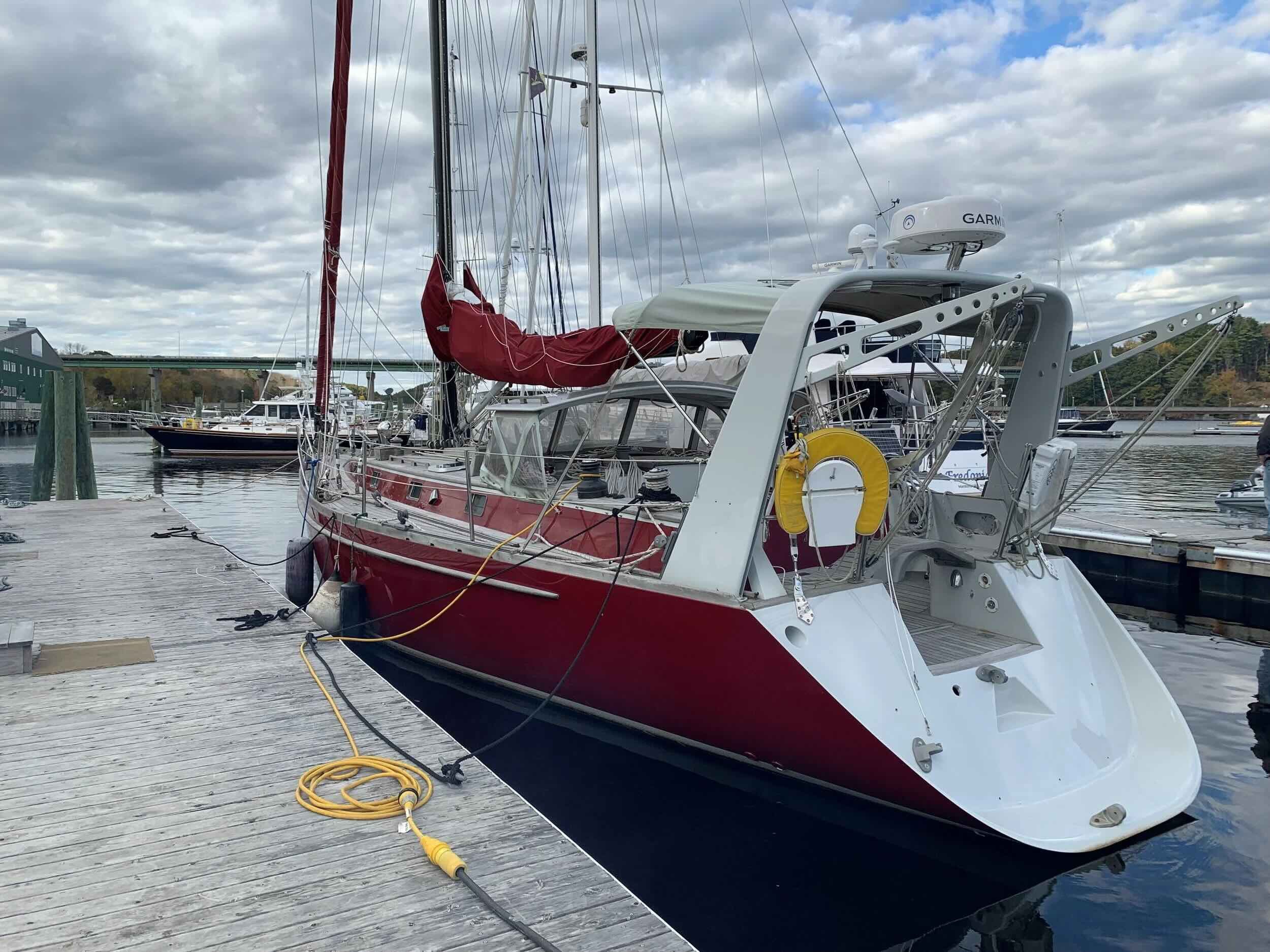
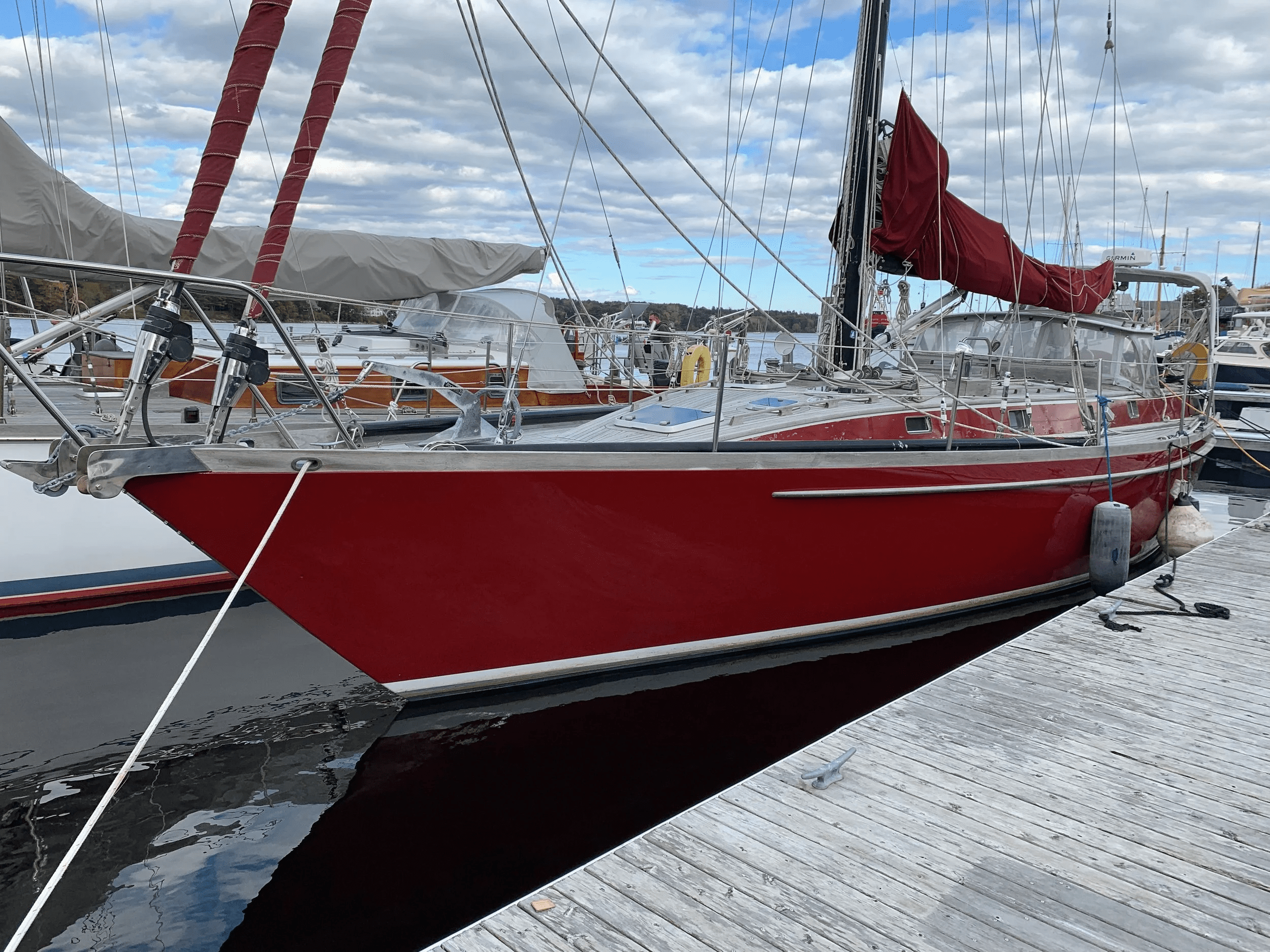
The second is Lucayo. A cold-molded Brooklin Boat Yard 48, custom-built for blue-water passage-making, designed by Roger Marshall and built to last. She’s crossed the North Atlantic, explored the Azores, sailed from Newfoundland to Venezuela. And right now, she’s sitting quietly under covers in Maine. Not waiting to be forgotten. Waiting for her next chapter.
On paper, Iroquois and Lucayo represent different points on the design spectrum. In practice, they’re asking the same question: what’s possible when you approach a well-loved yacht not as a commodity, but as a design opportunity?
The Restomod. The Refresher. And the space between.
We’ve written before about the art of the restomod — the philosophy of taking the best of a classic vessel and blending it with modern engineering, systems, and sensibility. Iroquois is a textbook example: a no-compromises reimagination where budget follows vision.
But not every second act needs to be a full reinvention. That’s where we think the conversation gets interesting.
Lucayo isn’t looking for a restomod. She’s looking for what we’d call a refresher — a thoughtful reimagining, guided by a clear creative brief. And the thinking isn’t all that different. You still ask the same essential questions: What do you keep? What do you change? Where does the character of the original boat survive, and where does the new owner’s vision take over?
The difference is the scale of the answer. In fact, the budget in a refresher isn’t a limitation. It’s a design parameter. It’s part of the brief.
There’s actually something clarifying about working within real constraints. It focuses the conversation on what matters. What is this boat for? How does her new owner want to use her? What does she need to feel like — underway, at anchor, over dinner? When you can’t do everything, you learn quickly what’s essential. And that discipline often produces the most personal, most considered results.
What makes Lucayo worth a second look.
Let’s be specific about the opportunity.
Lucayo was built by Brooklin Boat Yard — one of the most respected yards in Maine — and designed by Roger Marshall for an experienced offshore family. She was conceived as a fast, strong, long-range passage-maker. And she delivered on that promise, extensively, over decades of serious blue-water use.
Her cold-molded, wood-epoxy hull is the kind of construction that ages with grace. Her hybrid diesel-electric propulsion system, ahead of its time when installed, offers extended range, reduced fuel consumption, and a surprisingly quiet running environment. Her rig is serious: twin headstay Solent-style rig, electric furling, full-battened main, all lines led aft. Everything you need for short-handed offshore sailing.
She is, in a word, capable. And capable boats have a way of finding capable owners who know what to do with them.
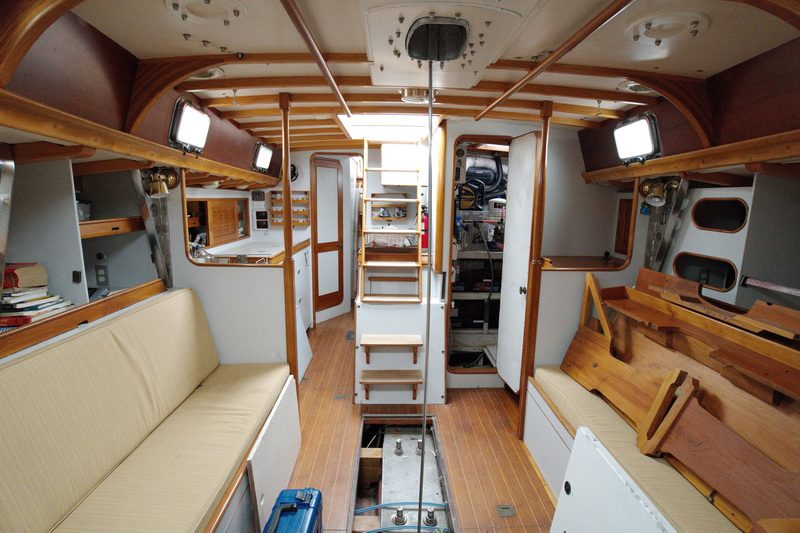
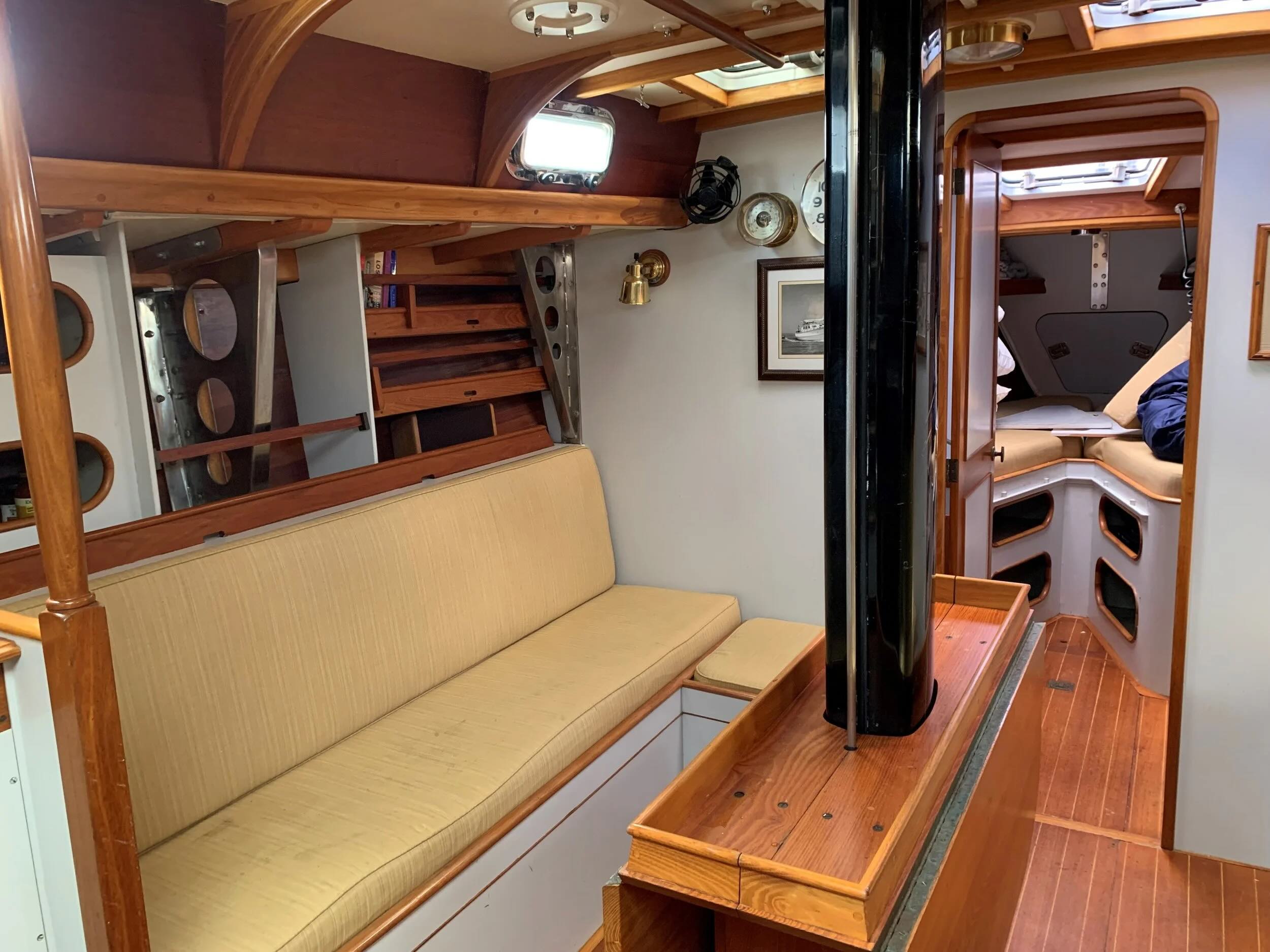
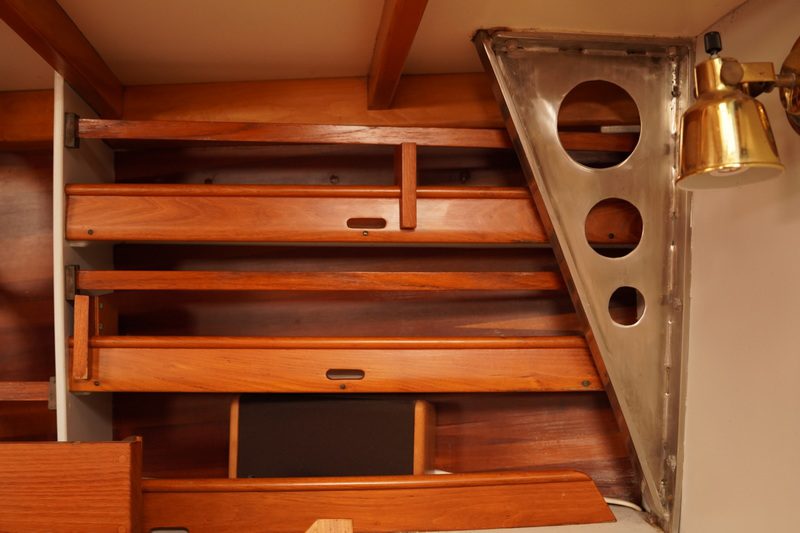
What Lucayo doesn’t have, yet, is a second design vision. An interior reimagined for the way her next owner actually lives. A few targeted upgrades that bring her systems and aesthetics in line with what’s possible today, without obscuring what made her worth building in the first place.
That’s where a design partner changes everything.
The SWD approach to a second act.
When we take on a project like this, whether it’s a restomod or a refresher, we start in the same place. We study the original design intent. We understand what the builder was trying to achieve and what they actually accomplished. We look at the hull, the systems, the spatial logic of the interior. We figure out what’s worth keeping and what’s ready to go.
Then we listen to the new owner. What are they chasing? More comfort interior? A cockpit better suited to entertaining? A design aesthetic that reflects their taste, not their boat’s history? Updated navigation and power management? The brief takes shape quickly when you’re working with someone who knows what they want — and with a designer who knows how to translate that into something buildable.
The result, in every case, is something deeply personal. A boat that isn’t trying to be a new boat. It’s trying to be this boat, at her best, for this owner.
That’s the vision we can bring to Lucayo. And frankly, it’s the same vision we bring to every project that comes through our studio.